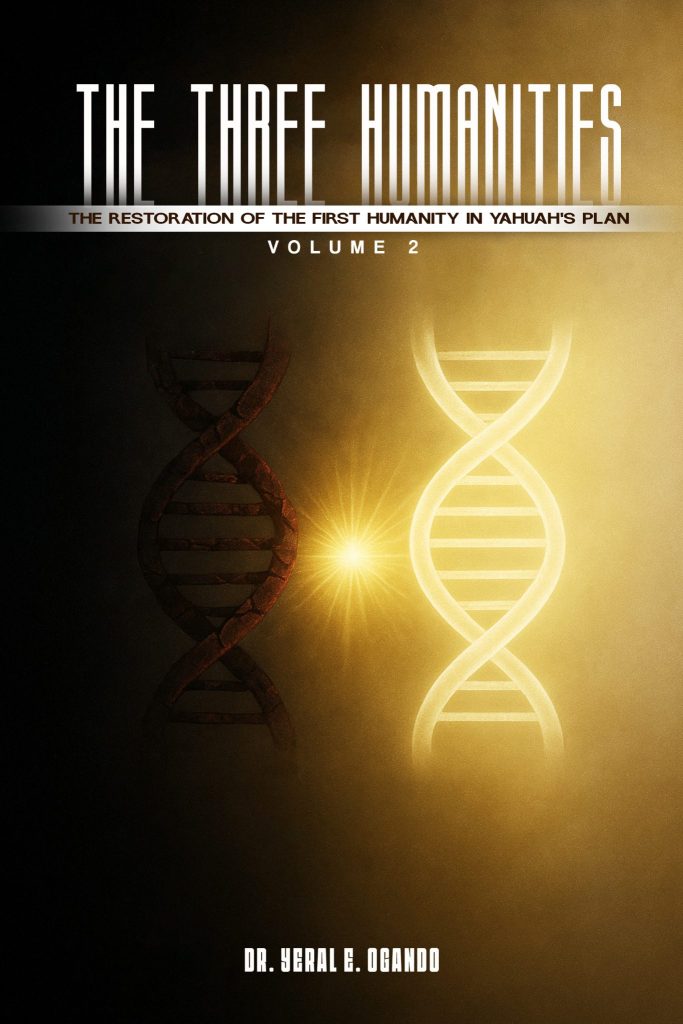
The Three Humanities: The Restoration of the First Humanity in Yahuah’s Plan Volume 2
The Three Humanities™ – Book 4, Chapter 10: Yahusha Son of Nun and the War Against the Nephilim Nations
This chapter examines Yahusha Son of Nun and the war against the Nephilim nations, revealing covenant defense, separation, and obedience to Yahuah.
 Login required to download
  Buy Paperback on Amazon
 Please login to track progress.
← Back to The Three Humanities™: The Rise of the Third Humanity – Conquest, Separation, and the Defense of Covenant Territory
How Yahuah Confronts the Corrupted Seed, Cleanses the Land, and Advances His Plan of Redemption Through Battle, Judgment, and Mercy
10.1 Yahusha: The Man Formed in the Wilderness for a Divine War
The transition from Mosheh to Yahusha is not merely a change in leadership—it is a shift in divine strategy. Mosheh is the deliverer from bondage; Yahusha is the conqueror of corrupted nations. Yahuah shapes Yahusha for decades: he fought Amalek (Exodus 17), he remained in the Tent of Meeting (Exodus 33:11), he spied the land and did not fear the giants (Numbers 13–14), and he received the Spirit of Wisdom (Debarim 34:9).
Where the first generation trembled, Yahusha stood firm. His name means “Yahuah is salvation,” and he becomes the prophetic shadow of the Greater Yahusha to come. But before salvation can expand, the land must be purified. Yahuah commands war—not genocide, not murder, not racism—but universal cleansing of spiritual corruption. To understand this, we must revisit the map of ancient giants.
10.2 The Land of Canaan: A Stronghold of Nephilim, Rephaim, Anakim, Emim, and Zamzummim
Canaan is not ordinary land. The Torah reveals it is infested with giant clans, remnants of the Nephilim: “We saw the Nephilim there… the sons of Anak, which come of the Nephilim.” (Numbers 13:33) Anakim are taller than all peoples (Deut. 9:2), descendants of Arba, and from this line later comes Goliath. Rephaim are a race of giant warriors; Og king of Bashan is last of them (Deut. 3:11).
The Emim were feared by Moab and were giants as tall as the Anakim (Deut. 2:10). The Zamzummim were a giant people destroyed by the Ammonites (Deut. 2:20–21). Horim of Seir are Rephaim-influenced cave dwellers. Their practices include child sacrifice, sorcery and divination, Nephilim cult worship, sexual perversion linked to demonic pacts, and, in some traditions, acts of cannibalism and blood rituals. Because of this, “The land is defiled… therefore the land vomits out her inhabitants.” (Wayyīqrā 18:25) The conquest is not territorial expansion—it is a battle for the soul of creation.
10.3 Why Yahuah Commands the Destruction of These Nations (And Why This Is Not Genocide)
Scripture gives clear reasons. These nations are not normal humans; they descend from giants and are spiritually corrupted beyond repentance. Their practices—bloodshed, sexual depravity, sorcery, idolatry, child sacrifice to Molech, and demonic communion—defile creation (Lev. 18–20). The land itself cries out for cleansing (Genesis 15:16). Yasharal would be corrupted if they mingled with them (Deut. 7:1–6). This is spiritual, not ethnic.
These nations oppose the plan of salvation; every giant clan stands against the covenant. This is not about taking land but about restoring the earth from demonic bloodlines, fallen angel corruption, Nephilim influence, giant-ruled kingdoms, and spiritual pollution.
10.4 Crossing the Jordan — The Waters Part as at the Red Sea
Yahusha leads the new generation to the Jordan. “This day will I begin to magnify you…” (Yahusha 3:7) As the priests step into the river, “The waters… stood and rose up in a heap…” (Yahusha 3:16) The miracle declares that a new Mosheh is here, a new Exodus begins, and a new phase of salvation unfolds. “Every place the sole of your foot shall tread, I have given you.” (Yahusha 1:3) The battle already belongs to Yahuah.
10.5 Jericho — Spiritual Warfare, Not Military Assault
Jericho is not just a city; it is a Nephilim spiritual fortress. Before the battle, a supernatural Being appears—“The Captain of the Host of Yahuah.” (Yahusha 5:14) This is either the Angel of Yahuah or a pre-incarnate appearance of Yahusha Himself. The attack requires no swords and no siege engines—only trumpets, priests, and the Ark—because the walls are not merely stone; they are demonically reinforced fortifications. Yahuah collapses the walls, dismantling a spiritual stronghold and reclaiming territory from the gods of the Nephilim.
10.6 The Defeat of the Anakim — Yahusha’s Most Critical Victories
Prophecy said, “A people great and tall… Who can stand before the sons of Anak?” (Debarim 9:2) Fulfillment comes when “Yahusha cut off the Anakim from the mountains…” (Yahusha 11:21) Eliminating the Anakim breaks the core of Nephilim power, dismantles their structure, pushes back their genetic corruption, and shatters their spiritual darkness.
“None of the Anakim were left in the land of the children of Yasharal…” (Yahusha 11:22) except a remnant in Gaza, Gath, and Ashdod—the Philistine lands—from which arise Goliath, Ishbi-benob, Saph, and other giant warriors later defeated by Dawid. Yahusha’s victories prepare the stage for Dawid—and ultimately for Messiah.
10.7 Og of Bashan — The Last Great Rephaim King
Og of Bashan, with his 13.5-foot bed, rules territories connected to ancient giant traditions and is linked to Mount Hermon, gateway of the fallen angels. Mosheh began this war; Yahusha completed it: “And Yahusha took all that land…” (Yahusha 12:5) Bashan symbolizes universal evil, rebellion, and demonic strongholds. Taking Bashan is a celestial victory, not mere geography.
10.8 The Long War — Why Yahuah Does Not Remove All Giants at Once
“Yahusha made war a long time with those kings.” (Yahusha 11:18) Yahuah explains, “I will not drive them out in one year… lest the wild beasts multiply…” (Exodus 23:29) Practically, this preserves ecological balance. Spiritually, faith must grow gradually; each battle trains dependence; each victory shapes identity; and each cleared region breaks spiritual darkness. Salvation is both instant and progressive.
10.9 Rahab and the Canaanites Who Joined Yasharal — Redemption Within Judgment
Amid war, redemption shines. Rahab recognizes Yahuah, hides the spies, and aligns with the covenant. A Canaanite woman in a Nephilim society becomes ancestor of Dawid and ancestor of Yahusha. This reveals that Yahuah judges based on spiritual allegiance, not race, and that even in corrupted nations, individuals may be redeemed.
10.10 The Land Rested — A Prophetic Image of Final Redemption
“And the land rested from war.” (Yahusha 11:23) This rest foreshadows the Messianic Kingdom, the end of demonic influence, the purification of creation, and the final crushing of the serpent’s seed. Yahusha son of Nun foreshadows Yahusha Ha’Mashiyach. Both conquer the land, both defeat spiritual enemies, and both lead their people into rest. What Yahusha began in Canaan, Yahusha the Messiah finishes over all the earth.
10.11 The War Against the Nephilim and the Plan of Salvation
The divine progression—Adam, Abraham, Mosheh, Yahusha, Yahusha Ha’Mashiyach—reveals corruption, rebellion, warfare, and mercy. Yahusha’s conquest is essential: the land must be cleansed; the giant bloodlines confronted; the covenant nation established; the stage prepared for Dawid, the prophets, and Messiah. The war with the Nephilim is salvation history. Without these wars, the Messiah’s line would be compromised, the seed of the woman threatened, and the plan of redemption hindered.
10.12 Yahusha Son of Nun as the Warrior of Redemption
Yahusha stands as conqueror of giants, purifier of land, establisher of Yahuah’s kingdom, and prototype of the Final Redeemer. Through him, Yahuah demonstrates that no corrupted seed can stop His plan, no Nephilim nation can stand in His way, and no spiritual darkness can prevent redemption. The war of Yahusha son of Nun is not ancient history—it is a crucial chapter in the unfolding salvation of mankind.
Please register or login to track your reading progress.
👉 Register / Login
Comments