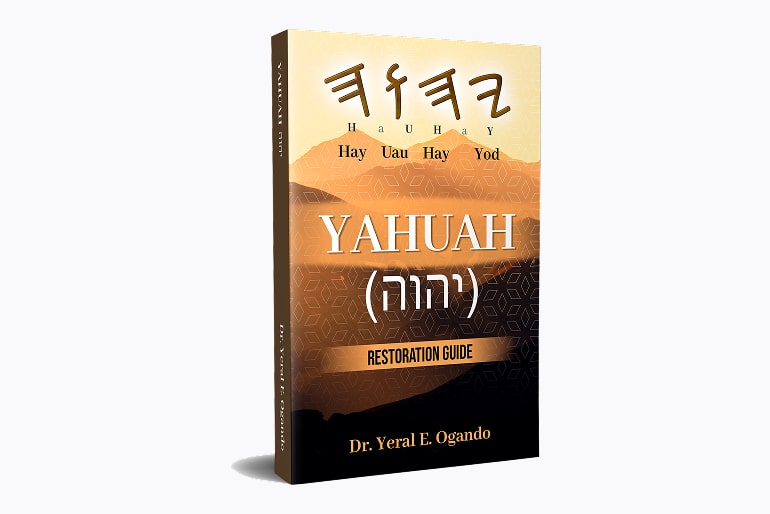
Yahuah: Restoration Guide
Yôsêph (Joseph) and slavery
Chapter 2 of YAHUAH: Restoration Guide examines Yôsêph, the origin of slavery, sin and obedience, the Tôrâh, and the Shabbath.
 Login required to download
  Buy Paperback on Amazon
 Please login to track progress.
← Back to Yahuah: Restoration Guide

Yôsêph (Joseph) and slavery
Remember Yaăqôb (Yaăqôb), from where the twelve tribes of Yâshârêl come out. Until that moment in history the people of YAHUAH or Yâshârêl had not been the slave of any nation.
When Yôsêph begins to have dreams from YAHUAH, his brothers, who were already jealous enough of him since Yaăqôb preferred him over the others because he was born from the love of his life Râchêl, for whom Yaăqôb had worked for 14 years, are even more jealous now with the dreams. Berēšhīṯh 37: 3Now Yâshârêl (Yaăqôb) loved Yôsêph more than all his children, because he was the son of his old age: and he made him a coat of many colors.
The zeal was so great that Yôsêph’s brothers conceived a plan to kill him, but Reûbên did not allow it. Berēšhīṯh 37: 20-21 Come now therefore, and let us slay him, and cast him into some pit, and we will say, some evil beast has devoured him: and we shall see what will become of his dreams. 21 And Reûbên heard it, and he delivered him out of their hands; and said, Let us not kill him.
Later his brother Yahûdâh (Judah) tried to prevent them from shedding his brother’s innocent blood and finally they decided to sell him. Berēšhīṯh 37: 26-27 And Yahûdâh said unto his brethren, what profit is it if we slay our brother, and conceal his blood? 27 Come, and let us sell him to the Yishmâêliy, and let not our hand be upon him; for he is our brother and our flesh. And his brethren were content.
A very wise decision from Yahûdâh to avoid spilling the blood of his brother; however, they did not think at all about the future consequences of their actions. By this action of selling their brother into slavery, they were selling themselves and their offspring into slavery for almost 450 years.
It should be noted that the decision of Yahûdâh made him the person who would carry the chosen lineage of the Mâshı̂yach for the centuries to come and because the first three brothers to inherit the firstborn rights were discarded by his actions (Reûbên sleeps with his father’s concubine, Shimôn and Lêwı̂y plotted and killed a whole town).
His brothers conceived the plan to enslave their brother the dreamer, however, YAHUAH used that plan to fulfill his purpose and the dreams he had shared with Yôsêph. But the decision of their brothers condemned them and all their descendants to slavery. It’s a bit ironic!
This is my favorite story in the whole Bible and Yôsêph’s character is my favorite, because I am amazed by Yôsêph’s relationship with YAHUAH. Yôsêph simply trusted that whatever happened in his life was for a reason and that behind that reason his Creator YAHUAH would glorify himself.
The surprising thing is that there is no record at all of YAHUAH speaking directly to Yôsêph. YAHUAH didn’t need to speak to Yôsêph, they both knew that the plan would be executed according to the will of YAHUAH and Yôsêph would accept that will, whatever it was. This is what we call a life of faith, or living by faith. It has always been by faith.
With this account we can clearly understand where the slaves came from; those whom YAHUAH sends to rescue from Mitsrayin (Mitsrayim) using Môsheh (Môsheh) as a liberating hand.
Sin and the Tôrâh (Law)
It is essential to understand what sin really means and what the Tôrâh represents in our lives. We hear many versions about the original sin and the conclusion that most people come to is that the sin was the eating of the forbidden fruit (it is not an apple).
Berēšhīṯh 2: 16-17 And YAHUAH ĔLÔHÎYM commanded Âdâm, saying, of every tree of the garden you may freely eat: 17 But of the tree of the knowledge of good and evil, you shall not eat of it: for in the day that you eat thereof you shall surely die.
If we read carefully, Âdâm’s sin was not actually the eating of the fruit that YAHUAH forbade him to eat. The eating of the fruit was the result of sin, not sin itself.
The real sin was disobedience. Man received his first commandment or Tôrâh and it was not to eat from the tree of the knowledge of good and evil.
Man disobeys the command of his Creator and as a result of breaking this Tôrâh his ordinance comes to eat the forbidden fruit.
Let me explain it in a more clear and contemporary way. You tell your son, “Don’t put your hands on the keys. They’re my car keys and they’re not for playing with. If you put your hands on him, I’ll punish you”. Something simple, simple and clear.
The moment your child puts his hands on the keys, you feel an anger, an anger and an impatience, because your child DISOBEYED your command. And you immediately proceed to reproach, punish and reiterate the command that you had given.
You want your child to obey your orders or commands, because you understand that, by obeying your command, he will be able to grow as a good man and in obedience. Disobedience is the part that makes us angry, it’s not because of the keys, it’s because he disobeyed our ordinances. This is the original sin and what led to the fall of all humanity: “disobedience.”
I think we still do not understand or assimilate well what original sin or disobedience really is or means in our lives. Due to the original sin, we are all born with the mark of sin on our bodies, that is, from the moment we are conceived and come into this world, our faithful companion is the original sin or disobedience.
Why do you think that the first thing a child learns to say is NO? And our greatest job as parents is to teach our children obedience. For we were born with the sin of disobedience and we only want to do or live without law “in sin”.
The child wants to do as he pleases all the time, he does not want to obey commands or ordinances; no matter how small any command we give him, he does not accept it because disobedience is the engine with which we are born.
And this original sin that is disobedience is present every day of our lives. When the child reaches adolescence, the situation is even worse, in fact, some call this stage as the stage of rebelliousness.
According to themselves, teenagers, they know more than everyone else, they are the only ones who are right and you can’t call attention to them, because they get angry, they stamp their feet, they curse, they run away and they are completely rebellious, because they just want to do according to their whims. That is the manifestation in life of the original sin.
By the time we reach adulthood, we think that we are going to get rid of disobedience, but this is not the case because while we are in this earthly body, we will carry the original sin in us.
As adults we always want to be right and we always want others to do what we say, and in many cases we even create our own laws to live according to our opinion. We are disobedient and allergic to everything that is called law. This is human nature. This is the original sin at work in our entire existence.
However, we must understand and ask ourselves, disobedience to what? Disobedience to the Tôrâh that was given to us. But if we did not have that Tôrâh that was given to us, then there would be no sin or disobedience.
What exactly does this statement mean?
| Obedience to the Tôrâh | = | Not sin |
| Disobedience to the Tôrâh | = | Sin |
That is to say, that the Tôrâh was given to us (the Ten Commandments, their statutes and ordinances) to serve as a regulation to follow, to know and recognize the sin that is synonymous with disobedience. If we did not have the law, we would not know the meaning of sin.
Therefore, to obey the Tôrâh is to walk a sinless life and to disobey the law is to walk in a life of sin (disobedience). Romans 3: 20 for by the works of the Tôrâh no human being will be justified in His sight (YAHUAH); for through the Tôrâh is the knowledge of sin.
We need the Tôrâh to walk in obedience; the Tôrâh is our measure to know whether or not we are in sin. Keeping the Tôrâh keeps us out of sin, not keeping it keeps us in sin. Romans 3: 24 being justified freely by his grace, through the redemption that is in the Mâshı̂yach YAHUSHA.
The Tôrâh does not give us salvation, there is only salvation by YAHUSHA, who justifies us by his grace and redeems us from sin, can give us salvation and, as a result of that redemption or salvation in YAHUSHA, we keep His commandments and keep ourselves out of sin.
To those who say that the Tôrâh is no longer necessary or that it has gone out of fashion, I say, if it were so, how would you know what is sin and what is not? 2 Corinthians 5: 20–21 So, we are ambassadors on behalf of the Mâshı̂yach, as if ELOHIYM were pleading through us; we beseech you on behalf of the Mâshı̂yach: Be reconciled to YAHUAH. 21 He made him who knew no sin to be sin for us, that we might be made the righteousness of ELOHIYM in him.
YAHUSHA knew NO sin because he always walked in obedience; however, he became a sinner for us in order to reconcile us to the Father YAHUAH. We need the Tôrâh to walk in obedience and without sin, and we need YAHUSHA to obtain salvation and eternal life.
The Ten Commandments
Let’s look at the Ten Commandments according to the Bible since there are people who accept some of the commandments and others do not. We all understand that the commandments were the ordinances or rules given to Môsheh in Šhemōṯh 20. It is unbelievable to say that almost the entire human race, whether believer or not, accepts and believes in most of the commandments, which serve as a moral and civic guide in most countries of the world. I say in most part of the Ten Commandments because some people reject to believe in two of them. Let us review them below.
3 You shall have no other gods before me: The Hebrew term for you shalt not have is Hâyâh (הָיָה) which means to exist. In other words, YAHUAH says that there will be no one other than Him. YAHUAH is the only Creator and ELOHIYM of our lives. NO one and NOTHING else.
4 You shall not make unto you any graven image, or any likeness of anything that is in heaven above, or that is in the earth beneath, or that is in the water under the earth. 5 You shall not bow down yourself to them, nor serve them: for I YAHUAH your ĔLÔHÎYM am a jealous ÊL (אֵל), visiting the iniquity of the fathers upon the children unto the third and fourth generation of them that hate me; 6 And showing mercy unto thousands of them that love me, and keep my commandments.
I do not understand what can be so difficult to understand, since all the terms and words used here are clear. No image of any kind should be honored, much less bowed down (prostrate, kneel, adore or venerate). Why? Because YAHUAH is jealous and does not share His creation with anyone, since He alone was the creator. So why break His commandment by following idols and images that they neither see nor feel…?
7 You shall not take the name of YAHUAH your ĔLÔHÎYM in vain; for YAHUAH (יהוה) will not hold him guiltless that takes his name in vain.
The word in Hebrew to define vain is Shâw (שָׁוְא) which means in the sense of desolation according to the Strong concordance…; evil, ruin, or especially deceit; idolatry, uselessness, in vain: – false, lying, vanity. In other words, taking His name in vain, it can be: speaking badly with the intention of harming and destroying someone using His name. Using His name to deceive, lie, or in idolatry, pagan cults or rites.
8 Remember the Shabbâth day, to keep it holy. 9 Six days shall you labor, and do all your work: 10 But the seventh day is the Shabbâth of YAHUAH your ĔLÔHÎYM: in it you shall not do any work, you, nor your son, nor your daughter, your manservant, nor your maidservant, nor your cattle, nor your stranger that is within your gates:
It is the most violated and ignored commandment by almost all of humanity. Don’t you know that the term or name Saturday, “Shabbath,” means rest; however, we will talk more about this commandment in the section on keeping the Shabbath.
12 Honor your father and your mother: that your days may be long upon the land which YAHUAH your ĔLÔHÎYM gives you: The whole world understands this commandment well and correctly.
13 You shall not kill: The whole world understands this commandment well and correctly.
14 You shall not commit adultery: I think this is the second most violated commandment in the history of mankind. However, there is an aspect about this commandment that some of us ignore, since we all think that committing adultery is only having sex outside of your marriage or with someone who is not your partner. And yes, this is the main concept, but the Hebrew term is Nâaph (נָאַף), which also translates as “apostasy“, means “to turn back”, “to relapse” in the spiritual sense or “to turn one’s back” to YAHUAH. So to commit adultery is also to turn your back or turn away from YAHUAH.
15 You shall not steal: The whole world understands this commandment well and correctly.
16 You shall not bear false witness against your neighbor: The whole world understands this commandment well and correctly. But it is so violated that we could say that it is the third commandment most violated both implicitly and explicitly.
17 You shall not covet your neighbor’s house, you shall not covet your neighbor’s wife, nor his manservant, nor his maidservant, nor his ox, nor his ass, nor any thing that is your neighbor’s: We all understand this commandment, but when we apply it, the reality of it escapes us and we forget that we should not covet, desire or lust for the things of others.
Of these Ten Commandments, the Second and the Fourth they are the most violated or ignored by humanity. People know that they should not have idols or images, much less worship them.
However, they ignore this commandment and come up with all kinds of cheap excuses to justify their sin. But in the end, I hope you can come to the biblical conclusion that with this practice you do not please at all YAHUAH and that you are transgressing the Second commandment given by YAHUAH for eternal obedience.
Even when the nations of the earth take the commandments as a guide to create their statutes and laws, something practically universal, they always distort and forget the fourth commandment to keep the Shabbath.
Keeping the Shabbath (The Fourth Commandment)
We will learn how the Roman Empire decided to change the Shabbath day (Saturday) for Sunday, an event that works for many as the main excuse to say that YAHUSHA abolished or fulfilled the Shabbath. So, those of short understanding prefer to fraudulently keep Sunday instead of Saturday.
The first thing we need to remember or consider about the Fourth Commandment to Keep the Shabbath is that it was a practice from the beginning of creation. Berēšhīṯh 2: 2And on the seventh day ĔLÔHÎYM ended his work which he had made; and he rested on the seventh day from all his work which he had made. 3 And ĔLÔHÎYM blessed the seventh day, and sanctified it: because that in it he had rested from all his work which ĔLÔHÎYM created and made.
What we are saying is that the Shabbath was kept from Berēšhīṯh 2 that is, the seventh day of the creation of the universe was the Shabbath. In conclusion, it was established about 2,500 years before the Tôrâh was given to Môsheh. In Šhemōṯh 20 we see the command to keep the Shabbath as the day of rest, thus reaffirming what the ancestors already practiced.
Jubilees 2: 19 And He said to us, “Behold, I will set apart for myself one people from among all the peoples, and these they will keep the Shabbath day and I will sanctify them for Myself as My people, and I will bless them; as I have sanctified the Shabbath day and I sanctify it for myself, so I will bless them, and they will be my people and I will be their ELOHIYM.
We all understand the Shabbath commandment, however, there are those who say that it has already been fulfilled and that this commandment is from the Mosaic Law and that it should no longer be kept. It is obvious that all these assertions are false.
Yirmeyâhû 17: 21 Thus said YAHUAH; Take heed to yourselves, and bear no burden on the Shabbâth day, nor bring it in by the gates of Yerûshâlaim; 22 Neither carry forth a burden out of your houses on the Shabbâth day, neither do you any work, but hallow you the Shabbâth day, as I commanded your fathers.
Yirmeyâhû 17: 27 But if you will not hearken unto me to hallow the Shabbâth day, and not to bear a burden, even entering in at the gates of Yerûshâlaim on the Shabbâth day; then will I kindle a fire in the gates thereof, and it shall devour the palaces of Yerûshâlaim, and it shall not be quenched.
Yechezqêl 20: 12 Moreover also I gave them my Shabbâth, to be a sign between me and them that they might know that I am YAHUAH that sanctify them. 13 But the house of Yâshârêl rebelled against me in the wilderness: they walked not in my statutes, and they despised my judgments, which if a man do, he shall even live in them; and my Shabbâth they greatly polluted: then I said, I would pour out my fury upon them in the wilderness, to consume them.
Yechezqêl 20: 16 Because they despised my judgments, and walked not in my statutes, but polluted my Shabbâth: for their heart went after their idols.
Yechezqêl 22: Her kôhên have violated my tôrâh, and have profaned mine holy things: they have put no difference between the holy and profane, neither have they showed difference between the unclean and the clean, and have hid their eyes from my Shabbâth, and I am profaned among them.
As we see in these few verses, the big problem (or the biggest problem) of Yâshârêl was forgetting Their Shabbath and that’s why they always suffered the consequences. The controversy of forgetting the Shabbath Day is nothing new and comes from generation to generation. This is a practice that indicates the forgetting of the law of YAHUAH and apostasy (turning away from YAHUAH) in the lives of those who practice it.
The anger of YAHUAH is kindled on those who profane his Shabbath day. Some are not seeing it yet, but soon they will be able to see how they have been in an eternal blindness that only leads them to perdition for ignoring His laws and desecrating His Shabbath day.
Yechezqêl 20:16 it is the verse that best describes our generation and the world today, the One who has discarded His decrees and replaced them with the decrees of men. The world does not walk in the statutes of YAHUAH rather, walks in the statutes of its own lusts or in the statutes of pagan governments or rulers, which have nothing to do with YAHUAH.
The desecration of their Shabbath is so great that they changed it to Sunday. And finally, the heart of almost all mankind goes after pagan idols or Gods. How sad.
YAHUSHA and the Two Commandments
Many people say that YAHUSHA fulfilled the law and that of all the Ten commandments the only one he fulfilled was the fourth commandment to keep the Shabbath, so that, according to them, one should no longer keep the Shabbath.
However, if YAHUSHA has already fulfilled the commandments according to many, so is it lawful to kill? Is it legal to steal? Is it permissible to commit adultery? Is it lawful to have other Gods or to idolize? Is it lawful to covet? Is it lawful to bear false witness? Is it permissible to take the name of YAHUAH in vain? Is it lawful to dishonor our parents? According to the people, then YAHUSHA could only fulfill one commandment (to keep the Shabbath) and had no power to fulfill the others… What a great stupidity…
That’s what those who say that the Shabbath should no longer be kept imply, that YAHUAH did send his Son to die for humanity in order to abolish ONLY ONE of the Ten Commandments that He gave to His people? (He never abolished them…) Or are you suggesting that the sacrifice of YAHUSHA was not enough to, according to you, abolish all the commandments? It is obvious that this alleged statement is completely false. No part of the New Testament states that YAHUSHA abolished the commandments.
YAHUSHA never came to abolish His Father’s commandments (YAHUAH), on the contrary, YAHUSHA came to show us that His commandments could be fulfilled. John 14: 15 If you love me, keep my commandments.
We could fill several books with so many Biblical quotes that affirm that keeping the Shabbath is the Fourth Commandment and that it will always be valid, as well as the other nine commandments. If we say that he abolished the Shabbath, we are then saying that he abolished all the commandments. It’s crazy to even think about it.
YAHUSHA, his disciples, the apostles and the early church kept the Shabbath. I will not talk about the other nine commandments because, apparently, the only commandment that everyone wants to allude to as abolished is the Shabbath, and believe me that those who claim this are more than blind.
In addition, it is interesting to note that the Shabbath is mentioned more than 50 times in the four Gospels; this is even more than what is mentioned in the first five books of the Old Testament.
The Pharisees were always trying to get YAHUSHA in trouble, for that reason and thanks to their short minds, they inquire about the commandments. However, YAHUSHA says in Matthew 22: 36 Teacher, what is the great commandment in the law? 37 YAHUSHA he said to him: You will love the YAHUAH your ELOHIYM with all your heart, and with all your soul, and with all your mind. 38This is the first and great commandment. 39And the second is similar: You shall love your neighbor as yourself. 40On these two commandments the whole law and the prophets depend.
Let’s understand what it is that YAHUSHA is saying in these verses since, he never said that those are the only two new commandments nor that the other commandments are no longer valid. To say or think this is inconceivable and unacceptable to any thinking mind.
Loving a YAHUAH: If you love a YAHUAH, obviously you will not have other gods in your life, nor will you worship or have any image to venerate or worship it, much less to prostrate and pray to it since it is an action that YAHUAH hates. Similarly, you would also not take the name of YAHUAH in vain and surely would you keep His day of rest, that is, the Shabbath. This means that in this short sentence of YAHUSHA the first four commandments of Šhemōṯh 20 are defined.
Love your neighbor as yourself: If you come to love your neighbor as yourself, then you will always honor your parents, you will never kill, you will not commit adultery, you will not steal, you will not raise false slanders and much less covet. This means that in this second sentence it refers to and includes the remaining six commandments. Wayyīqrā (Wayyīqrā) 19:18 You shall not avenge, nor bear any grudge against the children of your people, but you shall love your neighbor as yourself: I am YAHUAH. Not a new commandment, but firmly expressed since ancient times.
This is the thought of YAHUSHA, not the bad thinking that humanity has that the other commandments are already abolished. NO.
What YAHUSHA is telling you is that, if you really manage to fulfill these two commandments, you will be consequently fulfilling all the commandments of the law and the prophets. John 14: 15 If you love me, keep my commandments. And now I ask, what are the commandments of YAHUSHA?
It is obvious that the same commandments as those of the Father YAHUAH. Conversely, those who do not keep His commandments do not love Him. This is the reason why YAHUSHA says in Matthew 15: This people honors me with their lips, but their heart is far from me. Here he refers to those who are still blind and only honor our Creator with their lips YAHUAH and Salvador YAHUSHA.
Luke 4: 16He came to Nazareth (YAHUSHA), where he had been brought up; and on the Shabbath day he went into the synagogue, according to his custom, and rose up to read.
There it clearly says on the Shabbath, that is, on the Shabbath or Day of rest he entered the synagogue according to his custom. What was the custom of YAHUSHA? To keep the Shabbath. I think the verse explains it clearly.
Mark 6: He came out (YAHUSHA) from there he came to his own country, and his disciples were following him. 2And the Shabbath day has come (Saturday), and he began to teach in the synagogue; and many, when they heard him, wondered, and said, Whence has this man these things? And what is this wisdom that is given to him, and these miracles that are done by his hands?
Luke 13: 10He was teaching (YAHUSHA) in a synagogue on the Shabbath day (Saturday).
Luke 4: 31 He descended (YAHUSHA) to Capernaum, a city of Galilee; and he taught them on the Shabbath (Saturday).
YAHUSHA, as the Savior of humanity or of what had been lost, he understood the purpose of the Shabbath and knew that it was an appropriate time to carry his message of healing, hope and redemption for humanity, and also to proclaim that message with his actions.
Luke 6: 1It happened on a Shabbath day (Saturday), going on YAHUSHA through the fields, his disciples plucked ears of grain and ate, rubbing them with their hands.
Some misinterpret many verses, including this one, to say that YAHUSHA broke or abolished the Shabbath; however, they are wrong. The disciples were hungry and plucked ears of grain and ate them, but this does not mean that the disciples were harvesting or performing the task of harvesting. If we read in Debārīm 23: 25 When you come into the standing corn of your neighbor, then you may pluck the ears with your hand; but you shall not move a sickle unto your neighbor’s standing corn.
This is exactly what the disciples were doing. They never broke the Shabbath, as the Pharisees and the blind people of this time want to prove.
In fact, YAHUSHA introduced us to the original purpose of the Shabbath by returning to it as at the beginning: YAHUAH created the Shabbath as a time of blessing and true rest from daily chores, and not as a time of bitterness or heavy burden. Matthew 11: 30 for my yoke is easy, and my burden is light. Saturday is a time to be enjoyed, not to spend it with bitterness and sorrow. It is a day to spend it as you most want and make you feel better, away from routine jobs. Moreover, the Shabbath was not a day of rest only for the nation of Yâshârêl, but for all mankind. 95% of the miracles and healings of YAHUSHA they were made on a Shabbath, not in order to break it, on the contrary, to show us the best way to keep the Shabbath.
I don’t think it’s necessary to include a bunch of Bible verses to prove the obvious; the disciples were walking with their teacher YAHUSHA therefore, they kept the Shabbath.
The apostles did the same, they also kept the Shabbath. Acts 16: 13 And a day of rest (Saturday) we went out outside the gate, by the river, where prayer used to be held; and sitting down, we spoke to the women who had gathered. Timothy, Paul and Silas. It is clarified in case someone wants to say that they were not the apostles.
Acts 17: 2 And Paul, as his manner was, went in unto them, and three Shabbath days reasoned with them out of the scriptures…
Acts 18: 4 And he was arguing (Paul) in the synagogue every Shabbath day (Saturday), and he persuaded Yahudiy and Greeks.
Matthew 5: 17 Do not think that I have come to destroy the law or the prophets; I have not come to destroy, but to fulfill. 18For verily I say unto you, until heaven and earth pass away, not one drop nor one tittle shall pass from the law, until all things have been fulfilled. 19Therefore whosoever shall break one of these very little commandments, and teach men so, shall be called very little in the kingdom of heaven: but whosoever shall do them, and teach them, the same shall be called great in the kingdom of heaven. So be it!
These are proper and textual words of YAHUSHA that is, it is clearly said that he did not come to abolish, which is the same as abolishing, the Shabbath as a day of rest, but rather came to fulfill it. Moreover, he says that everything written in the law will be fulfilled to the letter and whoever does or keeps these commandments will be called great in the kingdom of heaven.
It is clear that the world does not listen to the word of YAHUAH because he says that YAHUSHA abolished them, but neither listen to the words of YAHUSHA since he commands us to fulfill what they say should no longer be kept. Who should we believe in? In men who are fallible or in YAHUAH what is eternal and infallible?
When did people start to forget about the Shabbath? As we have said before, the people of Yâshârêl have always been like all of us. In other words, when they were well, blessed and prospered, they turned away from YAHUAH, they forgot His statutes and profaned His day of rest (Shabbath). Consequently, they were handed over into the hands of their enemies or neighboring nations to be conquered and suffer the consequences of forgetting the laws, statutes and the Shabbath of YAHUAH.
Then, from the pit of despair they cried out and YAHUAH sent a deliverer, renewed His covenant with them, the people remembered the laws and statutes of YAHUAH and so they entered the cycle of blessings. This is basically the same story of all humanity; and it includes us, since we are not the exception.
Sometimes we criticize the people of Yâshârêl, but we do not notice that we act in the same way as they do. YAHUSHA came and set us free to live in harmony and communion with YAHUAH, but we are still in the same. Then, thanks to our disobedience and forgetfulness of the laws and statutes of YAHUAH, the biggest disappointment of all time came.
I will then tell you what happened briefly. The Emperor Constantine appeared with his dream of uniting the church with the state, and he did so. Two of the main goals and points of the new kingdom of the Roman Empire were to make sure that no one worshipped any other ELOHIYM but the ELOHIYM created by Constantine and his church.
As a consequence, those who kept the Shabbath and kept the feasts of YAHUAH they were considered heretics, persecuted, executed, burned, imprisoned and everything you already know. This was the origin of our century to forget the Fourth Commandment, so that Constantine and his empire decided that the day they should keep and consecrate was no longer Saturday, but Sunday. This was in honor of the pagan ELOHIYM Mithras or the sun ELOHIYM.

Please register or login to track your reading progress.
👉 Register / Login
Comments