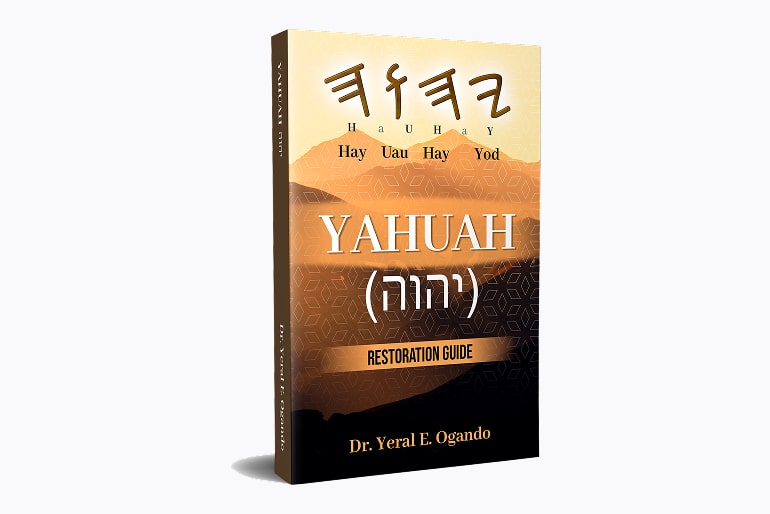
Yahuah: Restoration Guide
THE FEASTS OF YAHUAH (BIBLICAL FEASTS)
Chapter 3 of YAHUAH: Restoration Guide explains the seven biblical feasts, the appointed times, and YAHUAH’s plan of redemption.
 Login required to download
  Buy Paperback on Amazon
 Please login to track progress.
← Back to Yahuah: Restoration Guide
The Seven Feasts of YAHUAH, the Plan of Redemption, and the Appointed Times

The Feasts of YAHUAH (Biblical Feasts)
According to the Bible there are various holidays celebrated in honor and in commemoration of a special time or action by and for YAHUAH. Many people tend to believe that the Biblical Holidays were abolished or that they are no longer necessary to keep and celebrate today.
Everyone is free to believe as they like, however, we will be sharing the information about the 7 Biblical Feasts and all holidays according to the bible for every year, a total of 70 days of holidays and the mandate of YAHUAH for us to celebrate them. By looking at the mandates of YAHUAH, everyone will be able to decide if they want to incorporate them into their life or not. For my part, I have the following reasoning that I want to share with every person who reads this short guide.
There are many pagan holidays in honor of pagan deities and even humans. Everyone decides to celebrate all these feasts or holidays without any objection, inconvenience or restriction. However, I wonder, which is more profitable, to celebrate the pagan holidays or to celebrate the YAHUAH’s?
Assuming that those who say that the Feasts of YAHUAH or Biblical Festivals were abolished or have already passed. Why then do they only celebrate the pagan holidays? Is it more profitable to honor pagan god than to YAHUAH? Everyone think for themselves and come to their own conclusion. I, for one, will celebrate and keep the Feasts of YAHUAH.
These are the main Bible holidays with their Bible verses so you can check and see for yourselves.
Some may wonder, why should we take the time to talk about the Holidays of YAHUAH?
Because in the seven Feasts of YAHUAH we can find the plan of redemption and salvation for all mankind. Understanding the Holidays will help us to have a better understanding of His master plan for us. In the same way, the biblical Feasts always have a historical aspect and an eschatological or futuristic aspect; moreover, they extend to all humanity until the last moment on this earth.
It is curious that the term used in Hebrew for the word Feast, in Wayyīqrā 23:2 Speak unto the children of Yâshârêl, and say unto them, concerning the feasts of YAHUAH (יהוה), which you shall proclaim to be holy convocations, even these are my feasts.
Môêd (מוֹעֵד) is the term used and may mean, according to the Strong Bible Concordance H3259, an appointment, specifically a festival, an assembly called for a definite purpose; place of meeting; also a sign as designated in advance: feast, allotted time.
The holidays are a date with YAHUAH our Creator and their purpose is that we can come to know Him better and rejoice in His presence. It is a reminder for us to have an idea of the plan of Redemption that YAHUAH has prepared in advance and for an already assigned future time.
In verse 2 of Wayyīqrā 23 he tells us something shocking, The solemn feasts from YAHUAH. I do not know if we have fully understood, the holidays whose are they? These feasts belong to YAHUAH, not to us or to any man.
The Hebrew term “Môêd” is first used in Berēšhīṯh 1: 14 And ĔLÔHÎYM said, Let there be lights in the firmament of the heaven to divide the day from the night; and let them be for signs, and for seasons, and for days, and years:
They have a historical character: because they present us with a time or activity in the past that originated them.
They have a prophetic character, that is, they point to the future: because they point us to the Mâshı̂yach and the end of time.
They all talk about the Messiah (YAHUSHA): because in them we find the advent of the Mâshı̂yach from when he was on earth and how he fulfilled the first feasts in his life.
They all have an agricultural context: as the people chosen by YAHUAH was a farming village, all the festivals revolve in a context of agriculture for a better understanding.
The seven feasts represent the seven days of creation: Because in seven days everything was created, YAHUAH gives us seven holidays a year through the feasts, as a reminder of his creation and as a future fulfillment plan. There are still 63 more holidays that we will address shortly.
The seven feasts represent YAHUAH’s plan of redemption: Because they present to us the plan of redemption from Berēšhīṯh to Revelation, reaching the fulfillment of the end times.
The holidays are in the Bible: because according to 2 Timothy 3:16 All Scripture is inspired by ELOHIYM… and if all scripture is inspired by YAHUAH, so the holidays are in the Bible. Consequently, they are part of the inspiration of YAHUAH.
Let us remember what the Apostle Paul says in Galatians 3: 24So the law has been our schoolmaster, to bring us to the Mâshı̂yach, that we might be justified by faith. The word used in Greek for schoolmaster is “paidagōgos (παιδαγωγός)”, that is “teacher or un tutor, instructor, school teacher.” What Paul is trying to tell us is that the law is our teacher that guides us until it leads us to the Mâshı̂yach and that the feasts are part of the law, therefore, they lead us and speak directly of our Redeeming Mâshı̂yach YAHUSHA.
Do we believe in the Law or the Torah? O do we believe in the doctrines or traditions of men? Do we believe that the Scriptures are inspired by YAHUAH, or not? These are questions that we should ask ourselves and reflect on the answer that we truly carry in our hearts. For if we truly believe that all Scripture is inspired by YAHUAH ELOHIYM, then we must believe in His Feasts, because according to the very words of YAHUAH, these feasts are His “YAHUAH’s». Or do we not believe in the first five books of the Bible? Let’s reflect on this question and be honest with ourselves.
The holidays are very important for YAHUAH and they talk directly about His beloved son, YAHUSHA, since YAHUSHA:
Was born on Pentecost.
Died on Passover or Pesach.
Was buried on the feast of Unleavened Bread and was the first fruits of the resurrection.
Sent His ruach (spirit) on the Pentecost or feast of weeks.
Yes YAHUSHA as the only child of YAHUAH came to fulfill his father’s will and took the time to make these holidays a reality at the most important moments of his earthly life, we must understand then that this shows us that the goal of YAHUSHA is to fulfill each and every one of these holidays in your life. We are called to imitate the life of YAHUSHA, not the lives of men.
In each of the Holidays we will see the plan of redemption of YAHUAH. This will give us a better perspective on the importance of the holidays in our lives and for humanity.
Pesach (Passover) and Unleavened Bread (Matstsah)
Šhemōṯh 12 / Jubilees 48 – 49
Let us start by reading the events that took us to the night of the Passover with the people of Yâshârêl.
Jubilees 48:9-18
9 The prince Mastema resisted before you and wanted to make you fall into Pharaoh’s hands. He helped in the incantations that the Mitsrayim made comparing themselves to you. 10 We allowed them to commit evil, but we did not tolerate medicine being made by their hands. 11 YAHUAH struck them with evil sores, and they could not fight them, for we forbid them to perform a single miracle. 12 Prince Mastema was confounded at all the signs and wonders. When he started shouting at the Mitsrayim that you they pursued with all the might of Mitsrayim, with their chariots and horses and with all the multitude of the peoples of Mitsrayim. 13 I came between them and Yâshârêl. And we delivered him out of his hands and out of the hands of his people, and YAHUAH brought them out through the sea as through the dry land. 14 All the people who had gone out to pursue Yâshârêl were thrown by YAHUAH, our ELOHIYM, into the sea, into the depths of the abyss, under the sons of Yâshârêl, just as the Mitsrayim had thrown their sons into the river. In a million he took revenge, and a thousand valiant paladins perished for every infant of the children of your people thrown into the river. 15 On the fourteenth, fifteenth, sixteenth, seventeenth, and eighteenth days Prince Mastema was bound and shut up, far from the sons of Yâshârêl, so that he could not slander them. 16 On the nineteenth day we released them to help the Mitsrayim and to persecute the people of Yâshârêl. 17 He hardened their hearts and strengthened them. But YAHUAH, our ELOHIYM, conceived it this way to strike the Mitzrayim and throw them into the sea. 18 And on the fourteenth we bound him, so that he would not slander the children of Yâshârêl on the day when they were going to ask the Mitsrayim for chattel and clothing, articles of silver, gold, and bronze, to plunder the Mitsrayim for the slavery they had violently imposed on them, for we did not take the children of Yâshârêl out of Mitsrayim naked.
Chapter 49
1 Remember the command that YAHUAH has given you about Passover. Celebrate it at the right time, on the fourteenth of the first month, by sacrificing before sunset and eating at night, at sunset on the fifteenth, from the moment the sun goes down. 2 For on that night – the beginning of the festival and of rejoicing – you were sitting down to eat Passover in Mitsrayim, and the forces of the prince Mastema had been sent to kill all the firstborn in the land of Mitsrayim, from Pharaoh’s son to the captive slave girl who is in the mill, as well as the animals. 3 This is the sign that YAHUAH gave them: In every house at the door of which they see the blood of an annual lamb, do not go in to kill, but pass by, so that all who are in the house may be saved, for the sign of the blood is at the door. 4 The forces of YAHUAH did as he commanded them, passing by all the sons of Yâshârêl, without reaching them the plague of destroying every life of animal, person or dog. 5 The plague was very great in Mitsrayim, and there was no house where he had not died, and there was weeping and crying. 6 Meanwhile all Yâshârêl was eating Pesach meat, drinking wine and praising, blessing and praising YAHUAH, the ELOHIYM of their fathers, ready to come out of the yoke of Mitsrayim and the evil slavery. 7 Remember this day all the days of your life, keep it every year all your life, once a year on its day, according to its law, without delaying a day from its date, or from month to month. 8 For it is an eternal rule, engraved on the heavenly tablets for all the children of Yâshârêl, let them celebrate it every year on its day, once a year, in all their generations without limit, for it is fixed forever.
On the night of Passover, that same day in the evening, at dusk, the people sacrifice the lamb and put the sign of the blood on the lintel as protection of YAHUAH.
That same night, the village begins to celebrate Passover, however, the angel of death kills all the firstborn of the Mitsrayim.
Pharaoh sends for Môsheh and Ahărôn and lets the people go. Mastema is tied up (the adversary) for 5 days (14, 15, 16, 17,18), but on the 19th, Mastema is released and incites Pharaoh’s heart to persecute YAHUAH‘s people.
YAHUAH divides the sea, and the whole army of Mitsrayim is drowned, thus taking revenge on Mitsrayim for all the Hebrew children they had thrown into the river.
I recommend you to read the 12th chapter of Šhemōṯh and Wayyīqrā 23 to get a better idea.
Wayyīqrā 23:4-8:
These are the solemn feasts of YAHUAH, the holy convocations, which you shall summon in their times: 4 These are the feasts of YAHUAH, even holy convocations, which you shall proclaim in their seasons. 5 In the fourteenth day of the first month (Âbı̂yb) at even is the YAHUAH‘s Pesach. 6 And on the fifteenth day of the same month (next day) is the feast of Matstsâh (second feast) unto YAHUAH: seven days you must eat Matstsâh. 7 In the first day you shall have a holy convocation: you shall do no servile work therein (no work). 8 But you shall offer an offering made by fire unto YAHUAH seven days (7 days not 8): in the seventh day is a holy convocation: you shall do no servile work therein (no work).
The first feast leads to two feasts together. On the first night (14th of Âbı̂yb) the Passover is celebrated (unleavened bread, bitter herbs); but that first night is also the first night of the feast of Unleavened Bread. It is then a 7-day feast, not a 8-days feast.
They needed:
The blood of the Lamb: they sprinkled on the Lintel of each one’s door so that when the angel of death (Mastema) passed by and saw it, he would go on by and not hurt any of the people of Yâshârêl.
The bitter herbs: these were lettuce-like vegetables, symbolizing the sufferings or bitterness during the 430 years of slavery.
The unleavened bread: it meant that they were ready and in a hurry, that they had to rush out of Mitsrayim, which means that they did not have time to ferment.
The meat of the lamb: remember that they had to eat the meat of the lamb that very night (only the first night). Nothing could be left for the next day and they could not break any bones.
Šhemōṯh 12: 8 And they shall eat the flesh in that night, roast with fire, and with Unleavened Bread – Matstsâh; and with bitter herbs they shall eat it.
Šhemōṯh 12: 14 And this day shall be unto you for a memorial; and you shall keep it a feast to YAHUAH throughout your generations; you shall keep it a feast by an ordinance forever.
Šhemōṯh 12: 19 Seven days shall there be no leaven found in your houses: for whosoever eats that which is leavened, even that soul shall be cut off from the congregation of Yâshârêl, whether he be a stranger, or born in the land.
In verse 14 he tells us: during your generations; by a perpetual statute.
This is the definition of the term perpetual, That lasts and stays forever. I think we all understand then the term used in the Bible, in other words, it means “forever, eternally». Therefore, I do not understand how it is that some say that these feasts were abolished, if in the Bible YAHUAH himself says that we should celebrate them forever.
In verse 19 he tells us that we should not have any leaven in our houses during those days. So let’s look at the application of the Passover supper and unleavened bread today. As it says YAHUAH, it is a reminder of His wonders with His people.
Pesach also means the “The Last Supper or Holy Supper” that YAHUSHA celebrated with his disciples.
As YAHUSHA shed his blood for the forgiveness of our sins once and for all, and then he became the perfect sacrifice. We no longer need the blood of the lamb or the sacrifice of the lamb.
Pesach and Matstsah in the New Testament
Matthew 26: 1 When YAHUSHA had finished all these words, he said to his disciples, 2 “You know that within two days Passover is being celebrated, and the Son of Man will be handed over to be sacrificed. 17 On the first day of the feast of unleavened bread, the disciples came to YAHUSHA, saying to him, “Where do you want us to prepare for you to eat the Passover?” 18 And he said, Go into the city to a certain man, and say to him, The Teacher says, My time is at hand; I will celebrate Passover at your house with my disciples. 19 And the disciples did as YAHUSHA commanded them, and prepared the Passover.
Mark 14: 12 On the first day of the feast of unleavened bread, when they were sacrificing the Passover lamb, his disciples said to him, “Where do you want us to go and prepare for you to eat the Passover?” 13 And he sent two of his disciples and said to them, “Go into the city, and a man carrying a pitcher of water will meet you. Follow him. 14 And wherever he enters, say to the master of the house, ‘The Master says, ‘Where is the room where I am to eat Passover with my disciples?’ 15 And he will show you a large upper room ready, prepared for us there. 16 His disciples went and entered the city, and found as he had told them, and they prepared the Passover.
Luke 2: 41 His parents went to Yerûshâlaim every year at the feast of Pesach. 42 and when he was twelve years old, they went up to Yerûshâlaim according to the custom of the feast.
Luke 22: 1 Now the feast of unleavened bread, which is called Passover, was at hand. 2 And the chief priests and the scribes sought how to put him to death; for they feared the people.7 The day of unleavened bread came, in which the Passover lamb had to be sacrificed. 8 And YAHUSHA sent Peter and John, saying, Go, prepare the Passover for us, that we may eat it. 9 They said to him, “Where do you want us to prepare it?” 10 He said to them, “Behold, when you enter the city, a man carrying a pitcher of water will meet you. Follow him to the house where he will enter, 11 and say to the householder of that house, ‘The Teacher says to you, Where is the room where I am to eat Passover with my disciples?’ 12 Then he will show you a large upper room ready; prepare there. 13 So they went and found as he had told them, and they prepared the Passover.14 And when the hour was come, he sat down to meat, and the apostles with him. 15 And he said to them, How I have longed to eat this Pesach with you before I suffer! 16 For I tell you, I will eat it no more, until it is fulfilled in the kingdom of ELOHIYM. 17 And when he had taken the cup, he gave thanks, and said, Take this, and divide it among yourselves. 18 for I tell you, I will drink no more of the fruit of the vine, until the kingdom of ELOHIYM comes. 19 And he took bread, and gave thanks, and brake it, and gave to them, saying, This is my body, which is given for you: do this in remembrance of me. 20 In the same way, after he had supped, he took the cup, saying, “This cup is the new covenant in my blood, which is being poured out for you.”
John 2: 13 The Passover of the Yahudiy was at hand; and YAHUSHA went up to Yerûshâlaim. 23 While he was in Yerûshâlaim at the feast of Passover, many believed in his name, seeing the signs that he was doing.
John 6: 4 And the Passover, the feast of the Yahudiy, was at hand.
John 13:1-30 1 Before the feast of Passover, YAHUSHA, knowing that his hour had come for him to pass from this world to the Father, as he had loved his own who were in the world, loved them to the end.
Acts 20:6 And we, when the days of unleavened bread were past, sailed from Philippi, and in five days we joined them at Troas, where we stayed seven days.7 On the first day of the week, when the disciples were gathered together to break bread, Paul was teaching them, having to go out the next day. And he continued his discourse until midnight.
Acts 12:3 And when he saw that this had pleased the Yahudiy, he proceeded to take Peter also. Those were the days of unleavened bread.
Acts 18: 20 and they besought him that he would tarry with them a while longer; but he would not consent, 21 but took leave of them, saying, At all events I must keep the coming feast in Yerûshâlaim; but I will return to you again, if ELOHIYM wills. And he sailed from Ephesus.
1 Corinthians 5: 6 Your boasting is not good. Don’t you know that a little yeast leavens the whole dough? 7 Cleanse yourselves therefore of the old leaven, that you may be a new dough, unleavened as you are; for our Passover, which is the Messiah, has already been sacrificed for us. 8 So let’s celebrate the feast, not with the old leaven, nor with the leaven of malice and wickedness, but with unleavened bread, of sincerity and truth.
Matthew 26: 26And while they were eating, he took YAHUSHA the bread, and blessed, and broke it, and gave to his disciples, and said, Take, eat; this is my body. 27And he took the cup, and when he had given thanks, he gave to them, saying, Drink of it, all of you; 28 for this is my blood of the new covenant, which is shed for many for the remission of sins. 29And I tell you that from now on I will no longer drink of this fruit of the vine, until that day when I drink it new with you in my Father’s kingdom (YAHUAH).
Let us recapitulate the final events of the earthly life of the Messiah.
Âbıyb 14: The Messiah is captured, just after celebrating Passover with his disciples. He is tried and found guilty by Caiaphas the high priest, the scribes and the elders. Now the chief priests, and elders, and all the council, sought false witness against YAHUSHA, to put him to death;
Âbıyb 15: YAHUSHA is whipped and at 9am (at the third hour of the day). When the morning was come, all the chief priests and elders of the people took counsel against YAHUSHA to put him to death: and delivered him to Pontius Pilate the governor. And they stripped him, and put on him a scarlet robe, crown of thorns on his head, and a reed in his right hand: And they spit upon him, and took the reed, and smote him on the head. And after that they had mocked him, they took the robe off from him, and put his own raiment on him, and led him away to impale him. Cyrene, Simon helped him with the stake and they impaled him. Now from the sixth hour (12:00 midday) there was darkness over all the land unto the ninth hour (3pm). By the ninth hour (3pm) they gave him vinegar to drink mingled with gall. Then YAHUSHA died by the end of that day. Before 6pm put in the tomb and anointed before 6am.
Âbıyb 16: the first day in the grave
Âbıyb 17: second day in the grave
Âbıyb 18: third day in the grave. The Messiah rises in the early morning, just before sunrise 6am. The Messiah is resurrected on the Shabbath or Saturday (never on Sunday).
Âbıyb 19: the tomb is empty, the Messiah rises on the third day, therefore on Saturday and not on the fourth day which would be Sunday. Peter is informed of the resurrection while the disciples are in hiding.
This means that:
The sacrifice or meat of the lamb is no longer necessary because YAHUSHA it was the perfect sacrifice.
The blood of the lamb is no longer needed because YAHUSHA poured it out once and for all and for the forgiveness of our sins. Now instead of the blood we use the wine, as YAHUSHA did so, thus representing the blood shed for each of us. Remember that we use unfermented wine because during those holidays nothing that contains yeast should remain or be used in our houses; as everyone will know, fermented wine contains yeast.
However, there is an even more dangerous yeast that is the internal yeast. This means that any bitterness, enmity, grudge, quarrel or strife should be removed from our lives during these celebrations.
The unleavened bread represents to us the body of YAHUSHA that was delivered for us.
Regarding bitter herbs, they will always represent the bitterness, pains, vicissitudes and hard work that we have gone through in our lives. At that moment we are handing them over to YAHUSHA.
So, at this time we celebrate the Passover and Unleavened Bread:
With bitter herbs (vegetables), unleavened breads and unfermented wine.
Remember that this is a celebration, a reminder or feast of YAHUAH. This means that, after having performed the rituals of eating the bread (body of YAHUSHA or the sign that we are ready for His coming, just as the people of Yâshârêl were, that is, ready to come out of slavery in Mitsrayim) and from eating the bitter herbs (in remembrance of the sufferings that the people of Yâshârêl went through in the 430 years of slavery in Mitsrayim and of the sufferings that they went through YAHUSHA.
In addition to the sufferings we have gone through in our lives waiting to be released from them) and of drinking the wine (in memory of how the blood of the lamb saved all the firstborn of Yâshârêl and not a single one died, and how the blood of YAHUSHA freed us from the slavery of sin, thus giving us eternal life in himself), we are incorporating into our lives the true meaning of this feast and it is, then, from that moment that we can follow with a gala dinner or any type of celebration or event that you think pertinent.
Let us not forget that that night the people of Yâshârêl were set free by the sign of the blood of the lamb on the lintel of the gate, but all the firstborn Mitsriy (Mitsrayim) died. In the same way as the blood of YAHUSHA was poured out for the forgiveness of our sins, we can celebrate our feast with a gala dinner (that’s how I do it) and share with everyone present Biblical stories and anecdotes, always remembering the greatness of our Creator YAHUAH and of our Savior YAHUSHA. This is a feast of joy that is celebrated for 7 days. In 2024 the Feast of Passover and Unleavened Bread was from April 2 to April 9 (on the calendar that everyone uses, that is, the Gregorian one).
Some may be wondering how they should celebrate these Holidays of YAHUAH or Biblical Feasts. We should celebrate them with joy, as we are remembering the greatness of YAHUAH our ELOHIYM. In my case, I prepared a banquet every day of the feast, during the 7 nights. I organized the main banquet on the first and last night of the feast for the delight and enjoyment of the whole family and gathered guests.
Plan of Redemption: on the first day the salvation of all the firstborn of Yâshârêl is celebrated; it is a reflection of the future advent that was the Passover lamb YAHUSHA and that was delivered by us (he died at this feast). In the same way, it leads us to long to celebrate this feast with our Savior YAHUSHA once again.
Historical application: The liberation of Yâshârêl from slavery in Mitsrayim (Mitsrayim).
Future application: Death of YAHUSHA on the cross.
Spiritual application: Faith and repentance in the blood of YAHUSHA.
The Plan of Redemption in the Unleavened Bread: It begins on the very night of the Passover feast, since, the next morning, the people of Yâshârêl were freed from the yoke of slavery. This feast takes us back to YAHUSHA and he reminds us of the suffering when he took the whole weight of humanity on his men to give his life for us (he was resurrected during this feast). We remember the time of slavery and vicissitudes with the expectation that soon our Creator YAHUAH and our Savior YAHUSHA will free us from every eternal yoke by dwelling in the New Yerûshâlaim.
Historical application: The departure of the people of Yâshârêl from Mitsrayim or liberation from slavery, and the crossing of the Red Sea.
Future application: Burial and resurrection of YAHUSHA (a first fruit from the dead).
Spiritual application: Purification and separation from the bad things in our life, and beginning of a new life in YAHUSHA, the Mâshı̂yach.
The Feast of Shâbûa (Pentecost)
Wayyīqrā 23:9-16, Šhemōṯh 34:22, Šhemōṯh 23:16, Bemīḏbar 28:26, Jubilees 6:15-21.
This is one of the biggest holidays in the Bible and is known under different names: Feast of Weeks, Feast of Harvests and Feast of First Fruits.
Let us first see the origin of this feast when Nôach and his sons came out of the ark in the book of Jubilees 16:15-21 & 24:
15. And He gave to Nôach and his sons a sign that there should not again be a flood on the earth. 16. He set His bow in the cloud for a sign of the eternal covenant that there should not again be a flood on the earth to destroy it all the days of the earth. 17. For this reason it is ordained and written on the heavenly tablets, that they should celebrate the feast of weeks in this month once a year, to renew the covenant every year. 18. And this whole festival was celebrated in heaven from the day of creation till the days of Nôach, twenty six jubilees and five weeks of years: and Nôach and his sons observed it for seven jubilees and one week of years, till the day of Nôach’s death, and from the day of Nôach’s death his sons did away with (it) until the days of Abrâhâm, and they eat blood. 19. But Abrâhâm observed it, and Yitschâq and Yaăqôb and his children observed it up to your days, and in your days the children of Yâshârêl forgot it until you celebrated it anew on this mountain. 20. And do you command the children of Yâshârêl to observe this festival in all their generations for a commandment unto them: one day in the year in this month they shall celebrate the festival. 21. For it is the feast of weeks and the feast of first fruits: this feast is twofold and of a double nature: according to what is written and engraved concerning it, celebrate it. And Nôach ordained them for himself as feasts for the generations for ever, so that they have become thereby a memorial unto him.
There are many things that we don’t know or that we are not told about the feast of weeks or Pentecost. As you can see, it is dated back the days of creation, meaning Âdâm was the first to celebrated and then Nôach and it was lost with the children of YAHUAH whenever they went astray. The purpose of this feast has always been to renew our vows or covenant with YAHUAH.
Âdâm kept it, Nôach kept it by renewing his covenant, Abrâhâm kept it by renewing his covenant, Yitschâq is born and kept it by renewing his covenant, Yaăqôb kept it by renewing his covenant, Môsheh kept it by renewing his covenant and teaching the people to celebrate it, YAHUSHA is born on this feast and is the perfect sacrifice for the new covenant renewal.
The Hebrew word Shâbûa means weeks, this is why it is the Feast of the Weeks. It is an anticipation of excitement and waiting since from the last Saturday of the feast of Unleavened Bread the “omer” count begins. This is how we can determine the day for this feast.
Wayyīqrā 23: 15 And you shall count unto you from the morrow after the Shabbâth, from the day that you brought the sheaf of the wave offering; seven Shabbâth shall be complete: 16 Even unto the morrow after the seventh Shabbâth shall you number fifty days; and you shall offer a new meat offering unto YAHUAH (יהוה).
We must count seven Shabbath starting from the last Shabbath of the feast of Unleavened Bread, that is, 7 weeks (7 x 7=49) and the next day (day 50) is the great feast. This is why it is also called Pentecost; the word comes from the Greek πεντηκοστή, (pentecost) meaning “fiftieth or 50th”. This is the reason why this feast always falls on a Sunday, because we count the 7 Saturdays and the next day is the feast.
Wayyīqrā 23: 21And you shall call a holy convocation on this very day; you shall do no servile work (not working); perpetual statute (it is forever) wherever you live throughout your generations.
This is the farmers’ holiday. The people of Yâshârêl began their harvest right after the Feast of Unleavened Bread, and then they had seven weeks to complete the harvest time and have it ready to be able to bring the first fruits of their harvests as an offering to YAHUAH.
Since the farmers had to move from their dwellings to the temple in Yerûshâlaim, it was a pilgrimage holiday for the people of Yâshârêl.
Wayyīqrā 23: 22 When you reap the harvest of your land, you shall not reap to the uttermost corner of it, nor glean your harvest; you shall leave it for the poor and for the stranger. I YAHUAH your ELOHIYM.
That is why this feast also serves to donate and help the poor and the homeless. It is a festival where the tributes and offerings to YAHUAH they come from our work, that’s why part of the product of our work we donate to the poor and the foreigners as a sign or reminder of the blessings that YAHUAH gives us.
Acts 2: 2 And suddenly there came a sound from heaven as of a rushing mighty ruach, and it filled all the house where they were sitting. 3 And there appeared unto them cloven tongues like as of fire, and it sat upon each of them. 4 And they were all filled with the Rûach Qôdesh, and began to speak with other tongues, as the rûach gave them utterance.
The disciples were celebrating the feast, all the people of Yâshârêl were scattered among other peoples or nations who were coming or making pilgrimages to celebrate this solemn feast. It is at that moment that the disciples are in the room under the ordinance of YAHUSHA who had told them to wait for the Rûach (spirit) of ELOHIYM that would be given to them.
It was then that they received the Rûach of ELOHIYM on the day of Pentecost (new covenant), and as there were Yâshârêl coming from all the nations where they had scattered, the disciples began to speak in different tongues (languages) and each one heard them speak in their native language.
For us today this is the feast of Pentecost. As most of us are not farmers and we no longer grow fruits but have office jobs, our best offering to YAHUAH ELOHIYM it is our heart, our life, our time and our devotion in celebrating this feast that recalls the things He does every day in our lives and what He has done during the year. It is a great celebration with all kinds of fruits of the harvest, with wine, music, dance and joy. It is usually a feast that extends throughout the day, because it is a feast of salvation where people can give their lives to YAHUSHA. In the Biblical calendar for 2024 this feast falls on May 26. It is the day to renew your covenant with YAHUAH.
Plan of Redemption: We celebrate the blessings, harvests and fruits that YAHUAH has given us. On the eve of this feast, YAHUSHA ascends to heaven and begins his reign as our high priest. He demonstrated his success in the mission the Father gave him and set the pattern for his return to earth. Finally, during this feast, the advent of the Rûach of ELOHIYM came true.
Historical application: Blessings of the harvests and celebrating of the new covenant in the Mount Sı̂ynay.
Future application: Manifestation or coming of the Ruach of ELOHIYM in human hearts.
Spiritual application: Growth and knowledge in the new Faith. The renewal of our covenant with YAHUSHA.
Feast of the Trumpets
Wayyīqrā 23:23-25, Bemīḏbar. 29:1-6
This is the fourth feast of the year that YAHUAH tells us to celebrate in remembrance and honor of the great things that YAHUAH has done and is doing in our lives. The Feast of Trumpets is an alarm of war, a warning of peace.
Wayyīqrā 23: 24 Speak unto the children of Yâshârêl, saying, in the seventh month, in the first day of the month, you shall have a Shabbâth, a memorial of blowing of trumpets, a holy convocation. 25 You shall do no servile work therein (No work): but you shall offer an offering made by fire unto YAHUAH (יהוה).
The sound of the trumpets is used to transmit important messages, that is, a call to a meeting, the mobilization of the people, the sound of celebrations or joy.
Now, if we go back to the New Testament, we see that the sound of trumpets announces the coming of YAHUSHA or his return to find his people.
1 Thessalonians 4: 16Because YAHUSHA himself with a commanding voice, with the voice of an archangel, and with YAHUAH’s trumpet, will descend from heaven; and the dead in the Mâshı̂yach they will be resurrected first. 17
This is a day of great joy where we remember the warnings of the apocalypse and the second coming of our Savior YAHUSHA.
Matthew 24: 30Then the sign of the Son of Man will appear (YAHUSHA) in heaven; and then all the tribes of the earth will mourn, and they will see the Son of Man (YAHUSHA) coming on the clouds of heaven, with power and great glory. 31And he will send his angels with a great trumpet voice and they (angels) will gather together his chosen ones from the four winds, from one end of the sky to the other.
1 Corinthians 15: 52 in a moment, in the blink of an eye, to the final trumpet; because the trumpet will be blown, and the dead will be raised incorruptible, and we will be transformed.
The Feast of Trumpets is of the utmost importance today and in the future. When we celebrate it, we must remember the future events evoked by the feast of trumpets since we are announcing the coming of YAHUSHA.
At the sound of the seventh trumpet, the Mâshı̂yach returns and the trumpet awakens those who are asleep and are resurrected in YAHUSHA.
Revelation 11: 15 And the seventh angel sounded; and there were great voices in heaven, saying, The kingdoms of this world are become the kingdoms of our YAHUAH, and of his Mâshı̂yach; and he shall reign for ever and ever.
The trumpets call us to wake up, give us a shout for war or announce the battle and warn us that there is danger. They also indicate repentance and the second coming.
Âmôs 3: 6 Shall a trumpet be blown in the city, and the people not be afraid? Shall there be evil in a city, and YAHUAH has not done it?
Isaiah 27: 13 And it shall come to pass in that day, that the great trumpet shall be blown, and they shall come which were ready to perish in the land of Ashshûr, and the outcasts in the land of Mitsrayim, and shall worship YAHUAH in the holy mount at Yerûshâlaim.
The sound of the trumpets will also serve to summon or gather all the followers of YAHUAH from the four ends of the earth in order that they may come to unite in worshipping to the Creator of the universe.
This is a feast in which we are called to bring a sweet-smelling offering to YAHUAH, so our heart and willingness to celebrate His feast and make it a reality in our lives is one of the best offerings we can give on this day of joy. In addition to blowing the trumpets or the sound of the trumpets on this day, we can share the scriptures and information about the coming of YAHUSHA during a family dinner or with our guests. This holiday falls on September 16, 2024.
Plan of Redemption: This feast announces to us that the kingdom of YAHUAH is near and reminds us of the second coming of YAHUSHA for his people. He also warns us against the danger of having him for delay or forgetting his return, presents us with the end of the last harvest at the end of time when his elect will be gathered from all corners of the earth, and finally reminds us of the judgments that are to come and the trumpets of revelation.
Historical application: Sound and reminder to be prepared for war.
Future application: Announcing the second coming of YAHUSHA and the resurrection of the dead to come.
Spiritual application: To hear the call to repentance in our lives and to remember that the end is near.
Feast or Day of Atonement (Yôm Kippûr )
Wayyīqrā 23:27
Wayyīqrā 23: 27 Also on the tenth day of this seventh month there shall be a Yôm Kippûr: it shall be a holy convocation unto you; and you shall afflict your souls, and offer an offering made by fire unto YAHUAH (יהוה). 28And you shall do no work in that same day: for it is a day of atonement, to make an atonement for you before YAHUAH (יהוה) your ĔLÔHÎYM (אֱלֹהִים). 32 It shall be unto you a Shabbâth of rest, and you shall afflict your souls: in the ninth day of the month at even, from even unto even, shall you celebrate your Shabbâth.
This is a feast of Fasting and reconciliation with YAHUAH and YAHUSHA. It is a day of fasting, prayer and reading the word of YAHUAH. This feast is observed from evening to evening, in other words, it begins at dusk on the first day and ends at dusk on the next day. On this day, there is no food because it is a day of affliction of our souls and of getting closer to our Creator YAHUAH and Salvador YAHUSHA. This feast is the ultimate reminder that YAHUSHA paid the offering or sacrifice of our sins once and for all.
It is a day of covenant and reconciliation; renewing our vows with YAHUAH, we are renewing our contract of acceptance and following His word in our lives. This feast of Yôm Kippûr or day of affliction of our souls falls on September 25, 2024.
Plan of Redemption: After keeping us alert and giving us the feast trumpets and reminding us of His coming, he prepares us for the day of affliction of our souls. It is the day of renewal of our covenant with YAHUAH, of fasting, prayer and reading of the word. Here we repent of our sins and seek His forgiveness and reconciliation, and return to obedience of His laws.
Historical application: The High priest enters the most holy place for the forgiveness of the people’s sin.
Future application: The Coming of our High Priest and Savior YAHUSHA for his people.
Spiritual application: Giving of our lives in faith to receive eternal life in YAHUSHA our Savior.
Feast of Tabernacles or Sukkot
Wayyīqrā 23:34-36 / Jubilees 16:21-31
This is one of the three largest feasts in the Bible; it lasts 7 days or a week and two feasts are celebrated instead of one. These are the last two Biblical feasts of the year.
The origin of this feast was Abrâhâm, the first one on earth to celebrate this feast according to the book of Jubilees 16: 21 And he built there an altar to YAHUAH who had delivered him, and who was making him rejoice in the land of his sojourning, and he celebrated a festival of joy in this month seven days, near the altar which he had built at the Well of the Oath. 22 And he built booths for himself and for his servants on this festival, and he was the first to celebrate the feast of tabernacles on the earth. 25 And he celebrated this feast during seven days, rejoicing with all his heart and with all his soul, he and all those who were in his house, and there was no stranger with him, nor any that was uncircumcised. 29 For this reason it is ordained on the heavenly tablets concerning Yâshârêl, that they shall celebrate the feast of tabernacles seven days with joy, in the seventh month, acceptable before YAHUAH, a statute forever throughout their generations every year. 31 And Abrâhâm took branches of palm trees, and the fruit of goodly trees, and every day going round the altar with the branches seven times a day in the morning, he praised and gave thanks to his ELOHIYM for all things in joy.
From these verses in the book of Jubilees we can see how Abrâhâm celebrated the Feast of Tabernacles and how it was established in the heavenly tablets as an ordinance forever.
Wayyīqrā 23: 34 Speak unto the children of Yâshârêl, saying, the fifteenth day of this seventh month shall be the feast of Sûkkâh for seven days unto YAHUAH (יהוה). 35 On the first day shall be a holy convocation: you shall do no servile work therein. 36 Seven days you shall offer an offering made by fire unto YAHUAH (יהוה): on the eighth day shall be a holy convocation unto you; and you shall offer an offering made by fire unto YAHUAH (יהוה): it is a solemn assembly; and you shall do no servile work therein.
The Feast of Tabernacles is one of the most exciting holidays in the Bible. We get to experience what it’s like to dwell or live in tabernacles, “tents or booths,” for seven days.
Wayyīqrā 23: 40 And you shall take you on the first day the boughs of goodly trees, branches of palm trees, and the boughs of thick trees, and willows of the brook; and you shall rejoice before YAHUAH your ĔLÔHÎYM seven days. 41 And you shall keep it a feast unto YAHUAH seven days in the year. It shall be a statute forever in your generations: you shall celebrate it in the seventh month. 42 You shall dwell in booths seven days; all that are Yâshârêl born shall dwell in booths: 43 That your generations may know that I made the children of Yâshârêl to dwell in booths, when I brought them out of the land of Mitsrayim: I am YAHUAH your ĔLÔHÎYM.
The idea of this holiday is to build or erect tents and dwell in them for seven days; we can make them in our yard, go to a mountain, and go to the countryside or wherever we feel more comfortable. The purpose is that we use the tents, huts or camps as a reminder to our children and all the coming generations of the wonders YAHUAH has done for all of us.
The Feast of Tabernacles also has a future ramification, Zekaryâhû 14: 16 And it shall come to pass, that every one that is left of all the nations which came against Yerûshâlaim shall even go up from year to year to worship the King, YAHUAH Tsâbâ, and to keep the feast of Sûkkâh. 17 And it shall be, that whoso will not come up of all the families of the earth unto Yerûshâlaim to worship the King, YAHUAH Tsâbâ, even upon them shall be no rain. 18 And if the family of Mitsrayim go not up, and come not, that have no rain; there shall be the plague, wherewith YAHUAH will smite the heathen that come not up to keep the feast of Sûkkâh. 19 This shall be the punishment of Mitsrayim, and the punishment of all nations that come not up to keep the feast of Sûkkâh.
Hôshêa 12:9 And I that am YAHUAH your ĔLÔHÎYM from the land of Mitsrayim will yet make you to dwell in tabernacles, as in the days of the solemn feast.
Revelation 21: 3And I heard a great voice from heaven saying, Behold the tabernacle of YAHUAH with men, and he will dwell with them; and they will be his people, and YAHUAH himself will be with them as their ELOHIYM.
These are prophetic verses telling us that YAHUAH will make us dwell in tabernacles as in the feasts and celebrate them. This means that those who do not celebrate them will suffer devastating consequences. And even more important is that when YAHUSHA start his millennial reign, all the nations of the earth will go up to Yerûshâlaim to celebrate the Feast of Tabernacles.
And at the end of all time in Revelation 21, John tells us about the new heaven and the new earth, the new Yerûshâlaim; he tells us that YAHUAH himself will dwell with us in His tabernacle, thus making reference to the feast of tabernacles. How is it possible that many people say that this feast has already passed? Maybe we’re not reading the same Bible then. The Feast of Tabernacles is the last feast of the year and is the most important; it is a feast of joy and rejoice with our Creator YAHUAH and our Savior YAHUSHA.
In conclusion, at this feast we are going to have fun with YAHUAH using tree branches, palm trees; let’s take that moment to build or set up the tents with our children or relatives. We can also build the tent or camp in wood and make a roof of palm branches. It is a unique experience in which we can cook outdoors and in fire pits or stones as our ancestors did. This holiday falls on October 1-8, 2024.
Feast of the Eighth Day
Wayyīqrā 23:39 / Jubilees 32:27-29
As stated before, there were seven days in the feast of tabernacles; however, Yaăqôb added an extra days according to the book of Jubilees and as per the instructions of YAHUAH.
Jubilees 32:27-29: 27 And he celebrated there yet another day, and he sacrificed thereon according to all that he sacrificed on the former days, and called its name “Addition” for this day was added and the former days he called ‘The Feast. 28 And thus it was manifested that it should be, and it is written on the heavenly tablets: wherefore it was revealed to him that he should celebrate it, and add it to the seven days of the feast.
This addition is what we called the feast of the eight day in Wayyīqrā 23. Therefore, the feast of tabernacles is extended until the 8th day.
Wayyīqrā 23: 39 Also in the fifteenth day of the seventh month, when you have gathered in the fruit of the land, you shall keep a feast unto YAHUAH seven days: on the first day shall be a Shabbâth, and on the eighth day shall be a Shabbâth.
Our Savior and his disciples also celebrated these feasts; we can see it in the following Biblical quote in John 7: 2 &37 Now the Yahudiy’s feast of tabernacles was at hand. On the last and great day of the feast, YAHUSHA he stood up and lifted up his voice, saying, “If anyone is thirsty, let him come to me and drink.” 38Whoever believes in me, as the Scripture says, rivers of living water will flow from within him. 39This he said of the Ruach, which those who believed in him were to receive; for the Ruach of ELOHIYM had not yet come, because YAHUSHA he had not yet been glorified.
This last and great day of the feast refers to the last day of the Feast of Tabernacles; it is the great closing and culmination day of the Biblical feasts of that year. On this day we return from the feast of tabernacles to our normal abode.
Revelation 21:1-3: And I saw a new heaven and a new earth: for the first heaven and the first earth were passed away; and there was no more sea. 2 And I John saw the holy city, New Yerûshâlaim, coming down from ELOHIYM out of heaven, prepared as a bride adorned for her husband. 3 And I heard a great voice out of heaven saying, Behold, the tabernacle of ELOHIYM is with men, and he (YAHUSHA) will dwell with them, and they shall be his people, and ELOHIYM himself shall be with them, and be their ELOHIYM.
Don’t you know what YAHUSHA is our Tabernacle? Don’t you see how important the feast of Tabernacles is in our lives?
For this reason, the eighth day is considered the big day, because it is the closing or culmination of this important and exciting festival of YAHUAH in our lives. This day falls on October 8, 2024.
Plan of Redemption: It shows us the coming down of YAHUSHA as our tabernacle in the millennial kingdom of our Savior. This is the final feast or big feast where we will be with our Creator YAHUAH and our Savior YAHUSHA. At this moment there will be no more crying, no more pains, no more fears, because it will be our eternal redemption and dwelling in YAHUSHA.
Historical application: Entry into the Promised Land and great rejoicing of the people.
Future application: Messianic time or the millennium of YAHUSHA, a thousand-year period in which he reigns with his people.
Spiritual application: Rest in the bosom of YAHUSHA and of His kingdom in our lives and hearts; our eternal rest in the lap of our Savior.
Through the Seven Feast of YAHUAH, we can clearly see his plan of redemption of all mankind that YAHUAH has prepared and in which He commands us to celebrate and learn with earthly things in order to enjoy spiritual things eternally with Him.
If we can see and understand the plan of redemption of YAHUAH and make it a reality in our lives, we will see an approach with YAHUAH in our personal reality. Only those who are celebrating the feasts of YAHUAH will be alert and on guard waiting for the coming of YAHUSHA. The feasts are a constant reminder that we must be prepared every year for His coming.
When his feasts are present in our lives, we will long for the arrival of the moment of celebration of the feasts, we will be prepared and we will listen to the trumpet that announces the coming of our Savior YAHUSHA.
At the beginning of the year, we remember the redemptive sacrifice of YAHUSHA and his resurrection in the feast of Pesach and Matstsah; then we begin to count 50 days to celebrate the advent of the Ruach of ELOHIYM in the feast of Pentecost, and as if this were not enough, we prepare to blow the trumpets announcing his second coming. While we are remembering the Second Coming of our Savior, we take the moment to renew our covenant and relationship with YAHUSHA on the Day of Atonement and we prepare at the same time to enter the tabernacle of our Creator YAHUAH and to reign with our Savior YAHUSHA in the kingdom of the millennium.
It is obvious that the master plan of YAHUAH is infallible and those who listen and obey His commandments, statutes and precepts, and also keep or celebrate His feasts, will always be alert. By making these holidays a reality in our lives, we are making the redemption plan of YAHUAH be more and more clear and true in our hearts. We will always have His master plan present in our lives, consequently, we are alert and prepared for His return. HâlalYÂH.
The Seven Feasts of YAHUAH in 2022.
These are the 7 most important Biblical holidays and the ones we should remember while we have life or while we are still alive. They bring us the joy and enjoyment of YAHUAH to our lives and those of family and friends. The idea behind these holidays is great joy so that we always remember and have reasons to rejoice in YAHUAH.
Here I leave you a table with the names of the 7 Biblical holidays and the days when they fall in the year 2024 in the Gregorian calendar.
| 1 | Passover Dinner / First Shabbath of Unleavened Bread. Exo. 12 | April 2 |
| 2 | The Second Shabbath of Unleavened Bread. Exo. 12 & Lev. 23 | April 9 |
| 3 | Feast of Pentecost (Feast of Weeks) Lev. 23:9-16 Exo. 34:22 | May 26 |
| 4 | Feast of Trumpets Exo. 23:15-16; Deut. 16:16 Lev. 23:23-25. Num. 29:1-6 | September 16 |
| 5 | Day of Atonement (Yom Kippur) Lev. 23:27 – Fasting, prayer, reading the word and repentance. | September 26 |
| 6 | Feast of Tabernacles Lev. 23:34-35 | October 1 |
| 7 | The Feast of the Eighth Day Lev. 23:39 | October 8 |
Seventy Holidays or Biblical celebration per year.
Recounting the holidays and feast in the bible we can find 70 days a year.
7 Feasts a year: Pesach, Matstsah, Pentecost, Trumpet, Atonement, Tabernacles, Eighth Day
52 Shabbath a year: Each Saturday is considered a feast, because it is the day of rest established by YAHUAH since the very first beginning and it is an ordinance FOREVER.
11 blessings at the beginning of each month:
We will find in the bible numerous verses speaking about the blessings or celebration of the first day of each month; sadly to say, it was fraudulently changed by a wrong translation. Instead of using the correct term for the translation of the Hebrew word “chôdesh”, which is MONTH; in most of the translation has been replaced wrongly by the word “moon”. By doing this, they were able to conceal a normal biblical practice of blessing the month at the beginning of each month. However, we have finally restored the translation of the bible to its correct meaning.
Feel free to read these verses using our restored bible version at Dabar Yahuah Escrituras Yahuah and you will see the correct meaning.
“1 Shemûêl 20:5, 18&24, 2 Melāḵīm 4:23, Tehīllīm 81:3, Yeshayâhû 66:23”. These are only a few verses.
It is very important to understand that these eleven events are not feast nor Shabbath in the bible, these are a celebration presenting each month to YAHUAH. There are 11 because the feast of trumpets always starts the first day of the seven month, therefore, the blessings for the new month is kept together with the feast of trumpet.

Please register or login to track your reading progress.
👉 Register / Login
Comments