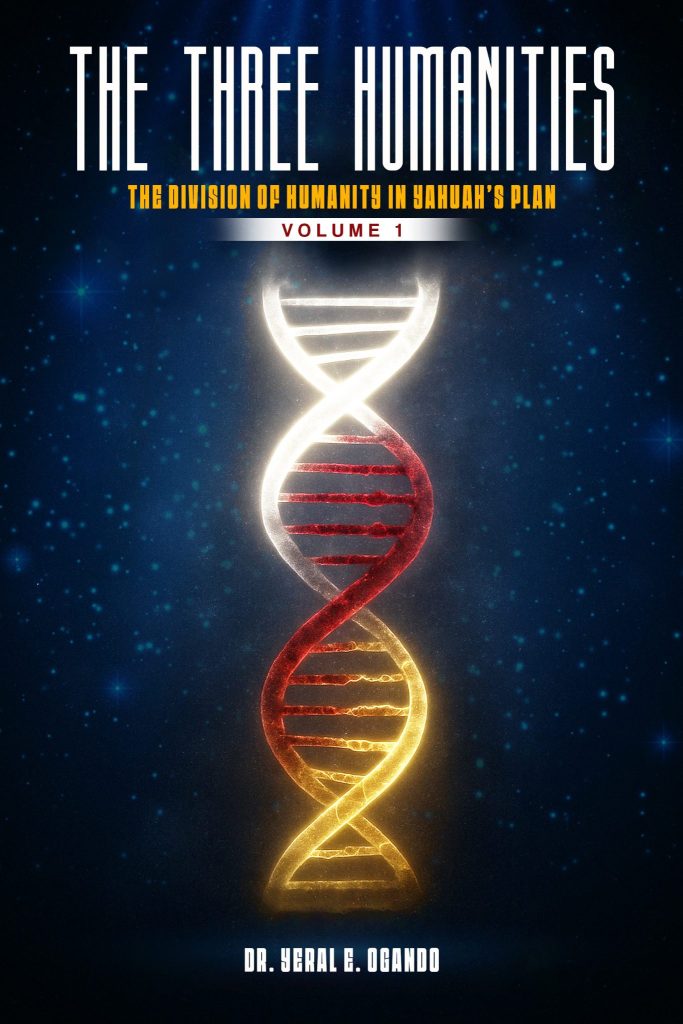
The Three Humanities
The Three Humanities™ – Book 2, Chapter 4: The Half-Truth of the Nachash
This chapter examines the half-truth of the Nachash, explaining the meaning of “you shall surely die” and how Yahuah transformed judgment into redemption.
 Login required to download
  Buy Paperback on Amazon
 Please login to track progress.
“The Day You Eat of It, You Shall Surely Die” — and How Yahuah Turned Even Judgment Into Redemption
The event in Eden is one of the most interpreted and misinterpreted moments in human history. Many believe that the declaration, “You will not surely die” (Bereshith 3:4), was a total lie from the Nachash (Gadre’el — the shining being, not a snake). But Scripture makes something clear: the Nachash spoke a half-truth, and Yahuah used this moment to reveal the first stage of His redemptive plan for humanity. To see this fully, we must weave together Bereshith (Genesis), Jubilees, and the prophetic meaning of “a day” in Yahuah’s perspective.
4.1 What the Nachash Said Was a HALF-TRUTH
The Nachash declared, “You shall not surely die” (Bereshith 3:4). He meant, “You won’t die right now.” And indeed, Adam and Chawwâh did not fall dead instantly, their spirits did not die, and they did not cease to exist. In this sense, what he said appeared true. But deception always mixes truth with falsehood. What the Nachash hid was the truth that mortality would begin, he concealed that the countdown to death would start instantly, and he obscured that the promise of death was literal — but in Yahuah’s timeframe. This is why his statement was a half-truth — and the deadliest kind.
4.2 What REALLY Happened When They Ate
Something irreversible occurred. Their bodies became mortal, their access to immortality was lost, their lifespan began counting down, physical death became certain, and humanity entered a new stage of history. Yet even this judgment contains the first traces of redemption. If Adam had remained immortal while disobedient, humanity would have lived eternally in rebellion — a condition beyond redemption. Mortality becomes a gift, not simply a punishment. It creates space for repentance, it limits the spread of corruption, it prevents eternal rebellion, it opens the path for resurrection, and it ensures Yahusha can redeem humanity later. Even in judgment, Yahuah is preparing salvation.
4.3 The Divine Measure of “A Day”
Scripture tells us plainly how Yahuah counts time: “One day is with Yahuah as a thousand years” (2 Kepha / 2 Peter 3:8). Therefore, the warning, “In the day you eat of it you shall surely die” (Bereshith 2:17), means, “Within the thousand-year day, you will die.” And this is exactly what happened. No human has ever reached 1,000 years, the full “Yahuah-day,” because the decree of mortality stands from Eden forward. The longest lifespan in Scripture (Methushelach) ends at 969, still short of the divine measure. But concerning Adam — Jubilees gives us the precise, authoritative detail.
4.4 Jubilees Records Adam’s Death With Exact Precision
“And at the close of the nineteenth jubilee, in the seventh week in the sixth year thereof, Adam died… and he was the first to be buried in the earth” (Jubilees 4:29). Jubilees continues: “And he lacked seventy years of one thousand years; for one thousand years are as one day in the testimony of the heavens. Therefore it was written concerning the tree of knowledge: ‘On the day that you eat thereof you shall die.’ For this reason he did not complete the years of this day; for he died during it” (Jubilees 4:30). Adam lacked 70 years of the thousand-year day. He died at 930, paralleling Genesis. He died within the divine day, exactly as Yahuah warned. This proves that Yahuah’s judgment was literal, the Nachash’s assurance was deceptive, and mortality was the beginning of the redemptive plan.
4.5 The Redemption Hidden Inside Judgment
Most people stop at “Adam died,” but the purpose of this book is to reveal the redemptive plan of Yahuah in every stage. Here is the hidden truth: mortality itself was the first act of mercy. If Adam had remained immortal in disobedience, humanity would live eternally in sin, corruption would become permanent, rebellion would spread without limit, no resurrection would be needed, and no salvation would be possible. Instead, Yahuah gave humanity mortality so redemption would be possible, exile so corruption would not enter Eden, prophecy so hope would remain, and promise so Yahusha could come.
In Eden, the plan of redemption begins immediately. The moment man became mortal, the need for a Second Adam was set into motion. Mortality is not the end of the story — it is the doorway to resurrection. Without death, there can be no resurrection. Without resurrection, there can be no salvation. Without mortality, there can be no new creation. Thus, the death of Adam becomes the first prophetic sign of the coming of Yahusha, the resurrection of the righteous, the renewal of creation, and the restoration of the First Humanity. Yahuah always turns judgment into redemption.
The redemption thread becomes clear: the Nachash spoke a half-truth, Adam did die — but in Yahuah’s thousand-year day, Jubilees gives exact death details (4:29–30), mortality began immediately, and mortality is part of Yahuah’s redemption plan. Because through mortality, corruption is limited, rebellion cannot become eternal, the Messiah can enter humanity, the resurrection becomes possible, and the First Humanity can be restored. The death of Adam is not the failure of creation — it is the beginning of salvation.
Please register or login to track your reading progress.
👉 Register / Login
Comments